AI-assisted intake for personal injury firms
Recover the PI cases your firm is already paying for.
Possible Minds helps serious prospects reach the right person while intent is still high. AI captures the inquiry, organizes the facts, and alerts the appropriate lawyer or intake closer. Your people build the relationship; the system removes the delay around them.
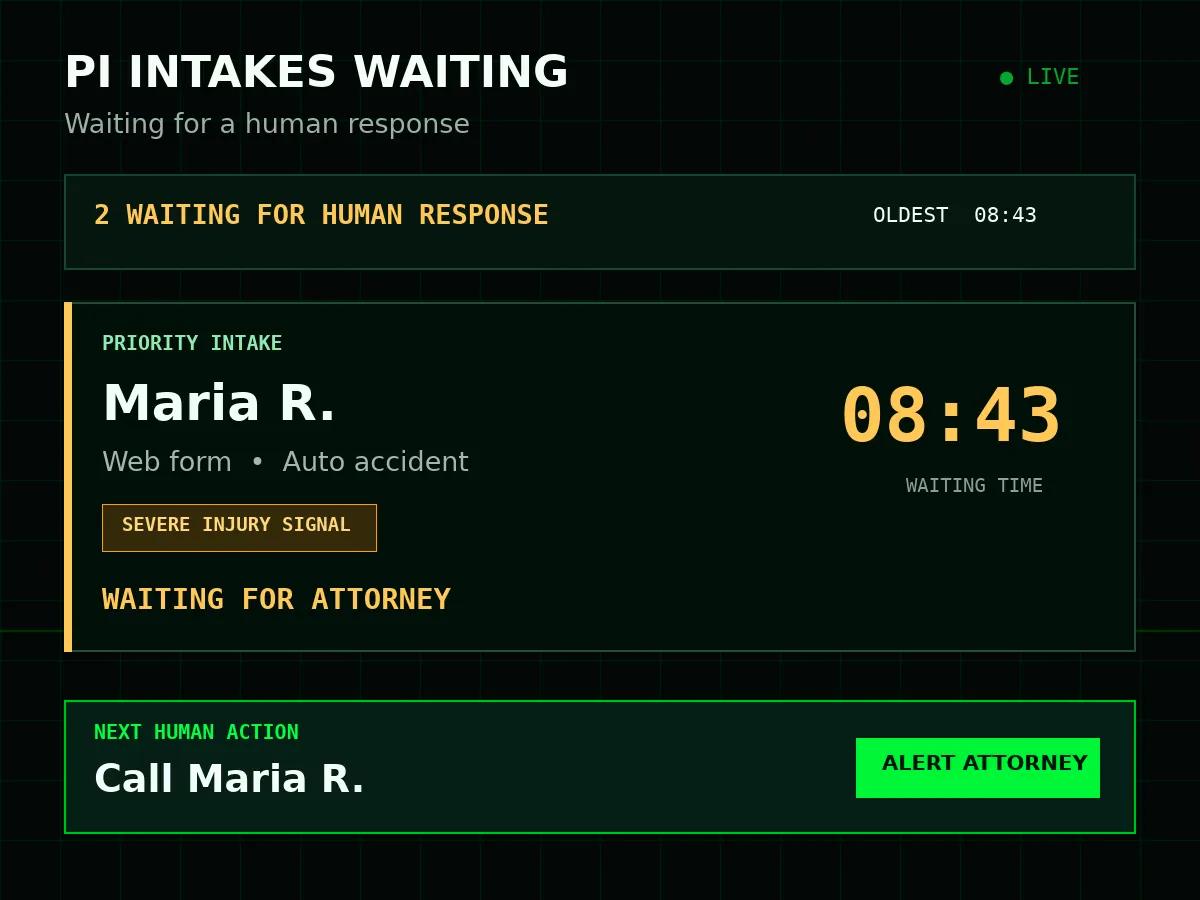
The unstaffed moment
The case you lost at 2:47 in the morning.
A serious inquiry should not wait in an inbox until morning. The system acknowledges it transparently, organizes the facts, and alerts the right person. AI removes the delay; your team builds the trust.

AI organizes. Human intake responds.
The intake revenue leak
Your marketing creates the opportunity. Intake determines whether it becomes revenue.
Most firms do not have one catastrophic intake failure. They have several small delays and handoff problems that compound across every lead source.
Missed and after-hours calls
High-intent prospects reach voicemail or wait until the next business day while faster firms respond.
Slow first response
Paid web leads cool before an intake coordinator can make contact.
Inconsistent qualification
Urgency, severity, shopping signals, and attorney-review triggers are captured unevenly.
Weak follow-up
Good prospects disappear because the next call, text, or email depends on staff memory.
Broken handoffs
Lead details do not move cleanly between the phone system, intake team, CRM, and attorney.
Unsigned retainers
A qualified prospect says yes, but document delivery, questions, and reminders stall the signature.
Minimal disruption
Improve intake without replacing the systems your team already uses.
The first workflow is deliberately narrow: measurable impact, limited integration, clear human review, and a short path to value.
Diagnose
Map one intake path and establish where revenue is leaking.
Connect
Work with the phone, forms, email, Lead Docket, Filevine, or other systems already in place.
Launch
Deploy one bounded workflow with clear human-review and escalation rules.
Measure
Track time to human contact, priority escalation, retainers, and signed cases.
Expand
Turn repeated implementation knowledge into a broader operating layer.

<90s
Automated response target
24/7
Inquiry coverage
Personal injury case study
The firm had leads. It needed an intake system that could keep up.
A Southern California plaintiff firm was losing after-hours web leads before its intake team could respond. We added transparent automated outreach, a call-ready brief, and human escalation around the team it already trusted.
Every inquiry entered a timestamped response path.
The AI identified itself and captured only the essential facts.
Serious matters reached a human with context.
Activity flowed back into the existing intake process.
See where your intake operation is losing signed cases.
We will map one intake path, identify the measurable leaks, and show what can be improved without replacing your existing stack.